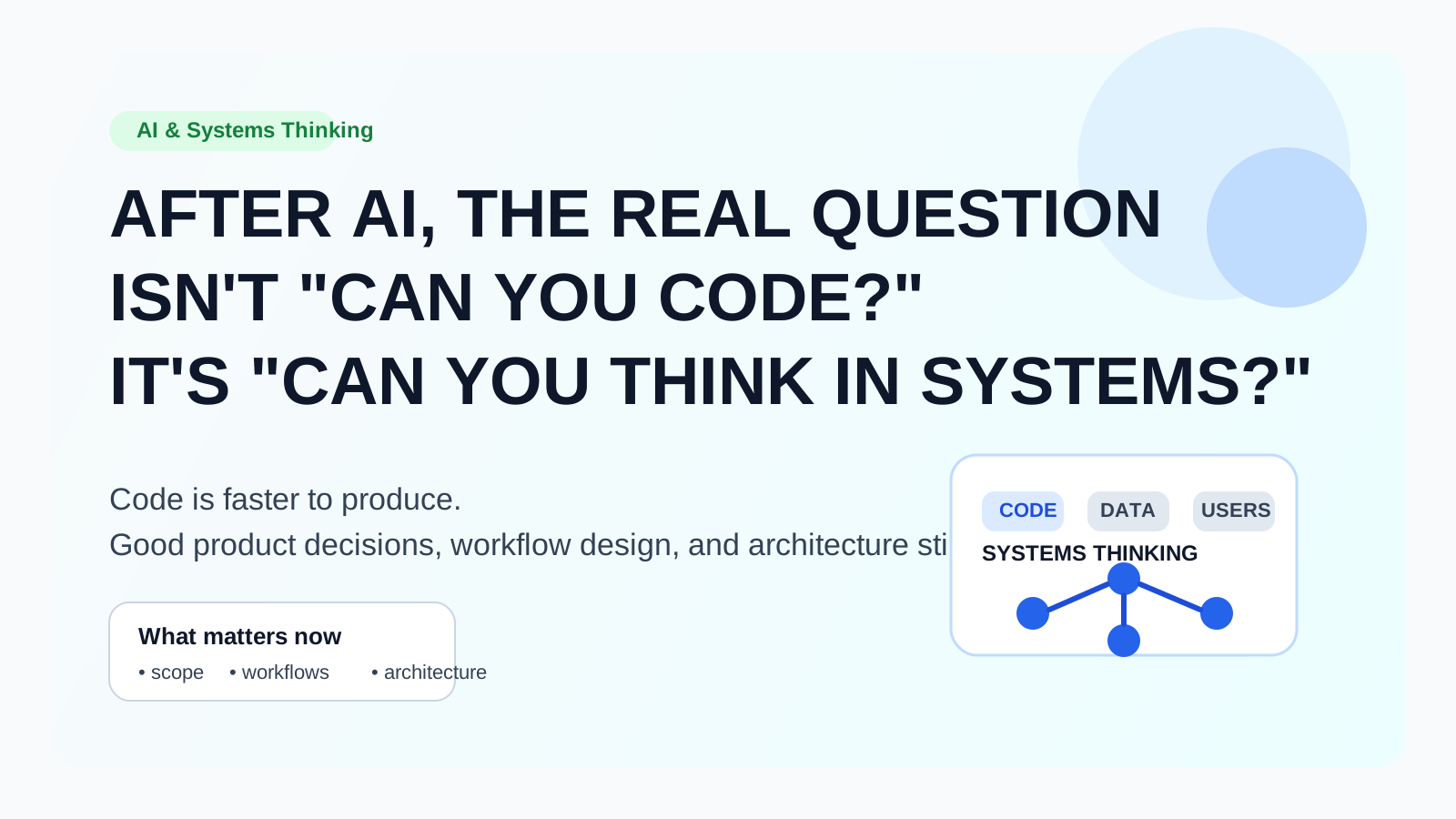
After AI, We Moved From "Can You Code?" to "Can You Think in Systems?"
For a long time, one of the easiest ways to evaluate a developer or software team was simple:
Can they code?
Can they build the feature, connect the API, fix the bug, and ship the release?
That question still matters.
But after AI, it is no longer enough.
AI has changed the baseline.
Today, many teams can move faster through:
- repetitive implementation
- boilerplate code
- admin dashboards
- CRUD flows
- debugging support
- test generation
- documentation drafts
That is real progress.
But it also means the real advantage has shifted.
The more important question now is:
Can you think in systems?
Because when code production becomes easier, the biggest risks move somewhere else:
- product decisions
- workflow design
- architecture choices
- data structure
- integrations
- permission models
- admin complexity
- long-term maintainability
That shift is bigger than it looks.
AI Changed the Cost of Writing Code, Not the Cost of Bad Decisions
AI can help teams generate code faster.
It can help with:
- common UI patterns
- refactoring suggestions
- repetitive backend tasks
- query construction
- code explanations
- testing ideas
But the cost of making the wrong decision early is still high.
AI can help create an admin panel quickly. It cannot decide whether that admin panel belongs in version one.
AI can help scaffold an integration. It cannot reliably judge whether that integration creates unnecessary delivery risk for an MVP.
AI can help draft a workflow. It cannot own the business consequences of that workflow.
So the bottleneck has moved upward.
The hard part is no longer only:
"Can we write the code?"
The hard part is:
- what should be built first
- what should be delayed
- what creates hidden complexity
- what can scale cleanly
- what will force rework later
That is systems thinking.
What “Thinking in Systems” Actually Means
Systems thinking sounds abstract, but in software it is practical.
It means understanding that products are not isolated features.
They are connected decisions.
A simple signup flow affects:
- onboarding
- user roles
- permissions
- analytics
- notifications
- support workflows
- admin visibility
A quote generator can later become:
- approval logic
- CRM integration
- invoicing
- customer portals
- finance reporting
- role-based access
A dashboard can later affect:
- operations
- leadership reporting
- sales visibility
- customer service workflows
- internal approvals
The developer or team that thinks in systems sees those connections early.
They do not only ask:
"Can we build this?"
They ask:
- How will this fit into the product later?
- What workflows does this affect?
- What happens when usage grows?
- What data model sits underneath this?
- Which shortcuts are safe, and which ones create future pain?
That kind of thinking is now more valuable than code speed alone.
The New Value of Senior Teams
This is one reason senior engineers and product-minded software teams matter more after AI, not less.
At first glance, AI makes it look like raw development skill is becoming cheaper.
But when execution gets faster, judgment becomes more important.
Senior teams create value by:
- reducing bad scope decisions
- avoiding unnecessary architecture
- spotting workflow problems early
- sequencing work properly
- preventing fragile shortcuts
- choosing what not to build yet
- keeping the product maintainable
In other words, AI compresses execution time, but it does not replace product judgment or systems thinking.
If anything, it makes weak decisions more dangerous, because teams can move faster in the wrong direction.
Why This Matters for Startups
Startups feel this shift quickly.
A founder can now build prototypes and experiments much faster than before.
That is useful.
But startups still fail when they:
- overbuild too early
- under-scope the MVP
- choose the wrong core workflow
- ignore permissions and role complexity
- add too many integrations too soon
- create a product structure that cannot evolve
So for startups, the question is not:
"Can AI help us build faster?"
Of course it can.
The better question is:
"Who is making sure we are building the right system?"
That is why good startup partners still matter.
They help founders avoid spending money on features that look useful in isolation but create unnecessary product weight.
They help define:
- the right MVP
- the right workflow boundaries
- the right launch scope
- the right technical structure
AI helps execution. Systems thinking protects direction.
Why This Matters for Businesses Replacing Manual Work
This shift is also important for established businesses.
Many companies now want automation, internal tools, dashboards, and custom workflows because AI makes software feel more accessible.
That is true.
But replacing spreadsheets and manual processes is not just about generating software faster.
It requires understanding:
- who uses the system
- what approvals exist
- where errors happen
- what leadership needs to see
- which integrations are required
- where automation helps and where human review still matters
Without systems thinking, businesses often end up with:
- disconnected tools
- duplicated data
- weak reporting
- partial automations
- fragile workflows
The software exists, but the system still does not work well.
What Good Software Teams Should Be Asked Now
If AI is now part of the delivery environment, businesses should update how they evaluate software partners.
Instead of only asking:
- What stack do you use?
- How fast can you build this?
- How many developers do you have?
They should also ask:
- How do you approach scope?
- How do you decide what belongs in version one?
- How do you think about workflows and permissions?
- How do you reduce rebuild risk?
- How do you handle integration complexity?
- How do you keep the system maintainable?
These questions reveal far more about delivery quality than raw coding claims.
The Real Competitive Advantage After AI
The strongest teams will not be the ones who only use AI to produce more code.
They will be the ones who combine:
- faster execution
- stronger product judgment
- better systems thinking
- cleaner architecture
- clearer workflow design
That is what creates durable business value.
Anyone can ship more code now.
Fewer teams can design a product or internal system that still makes sense after six months, twelve months, and the next phase of growth.
That is the difference that matters.
Final Thoughts
AI did not make engineering judgment less important.
It made it more visible.
Because once coding speed becomes easier to access, the real quality gap shows up in:
- thinking
- architecture
- prioritization
- workflow design
- systems decisions
So yes, the shift is real.
We moved from:
"Can you code?"
to:
"Can you think in systems?"
And for startups and businesses building real products, that change is bigger than it looks.
Need a Team That Thinks Beyond Features?
At MarqueFactory, we use modern tools, including AI-assisted workflows, but the real value we bring is not just faster execution.
It is:
- better scope decisions
- stronger MVP planning
- cleaner architecture
- practical workflow design
- systems built to support real business use
If you need a senior technical partner to shape a product, SaaS platform, internal tool, or workflow system, book a consultation.
You can also explore: