
Custom ecommerce case study
DecentStore: Custom Ecommerce Platform Development
DecentStore is an independent ecommerce application that brings product discovery, purchasing, and business operations into one custom platform. It combines a customer-facing storefront with admin and vendor dashboards, supporting the work involved in managing products, inventory, orders, promotions, and customer communication.
For business owners considering custom ecommerce development, DecentStore illustrates how a platform can accommodate requirements that extend beyond a basic online store.
Business needs addressed
An ecommerce business depends on the connection between its shopping experience and its internal operations. Customers need convenient ways to find products and complete purchases. Teams need tools to maintain the catalog, manage stock, follow orders, and coordinate vendor activity.
DecentStore addresses these connected requirements through a custom application. Its scope also includes country-based pricing and international shopping support, providing a foundation for serving customers across different markets.
Customer communication and courier payment reconciliation extend the platform’s scope further. These functions address work that continues after a customer places an order, helping connect commerce activity with operational follow-up.
MarqueFactory’s solution
DecentStore’s solution combines storefront functionality with dedicated management interfaces. Product discovery, cart, checkout, and customer accounts form the customer journey, while admin and vendor dashboards support business-side workflows.
The custom architecture provides room to adapt these workflows as requirements develop. Catalog management, promotions, notifications, and reconciliation can be considered as parts of the same commerce system rather than separate projects.
[Confirm which parts of this solution MarqueFactory designed, implemented, or maintained before publication.]
Key features and customer experience
Product, collection, brand, and search pages support different shopping habits. Customers can explore a category, browse a familiar brand, or look for a specific item. These paths help make a growing catalog easier to navigate.
Cart and checkout functionality connect product discovery with purchasing. Customer accounts support account-related interactions, while reviews provide additional information for shoppers evaluating products.
Coupons and promotions give the business tools for planned offers. Country-based pricing supports market-specific commercial rules, with supported countries and pricing behavior requiring confirmation.
Email campaigns and WhatsApp notifications provide communication channels beyond the storefront. Their practical use depends on configured integrations and the workflows enabled in production.
Technical approach
The frontend uses Next.js, React, TypeScript, and Tailwind CSS to build the storefront and dashboard interfaces. Reusable components support consistent presentation across customer and management screens.
Node.js and Express provide the backend foundation for application logic. MongoDB, accessed through Mongoose, supports the data layer for commerce records and related workflows.
Redis is integrated into the platform. [Confirm its specific responsibilities before describing caching, sessions, queues, or performance benefits.]
The repository also includes SEO support and regression checks for critical workflows. SEO capabilities support storefront discoverability, while regression checks help identify unintended changes during development. Their exact coverage and latest verification status remain to be confirmed.
Delivered capabilities
The implemented scope covers catalog, inventory, and order management alongside customer purchasing and vendor-facing functionality. Together, these capabilities provide a foundation for managing both the storefront and the work behind it.
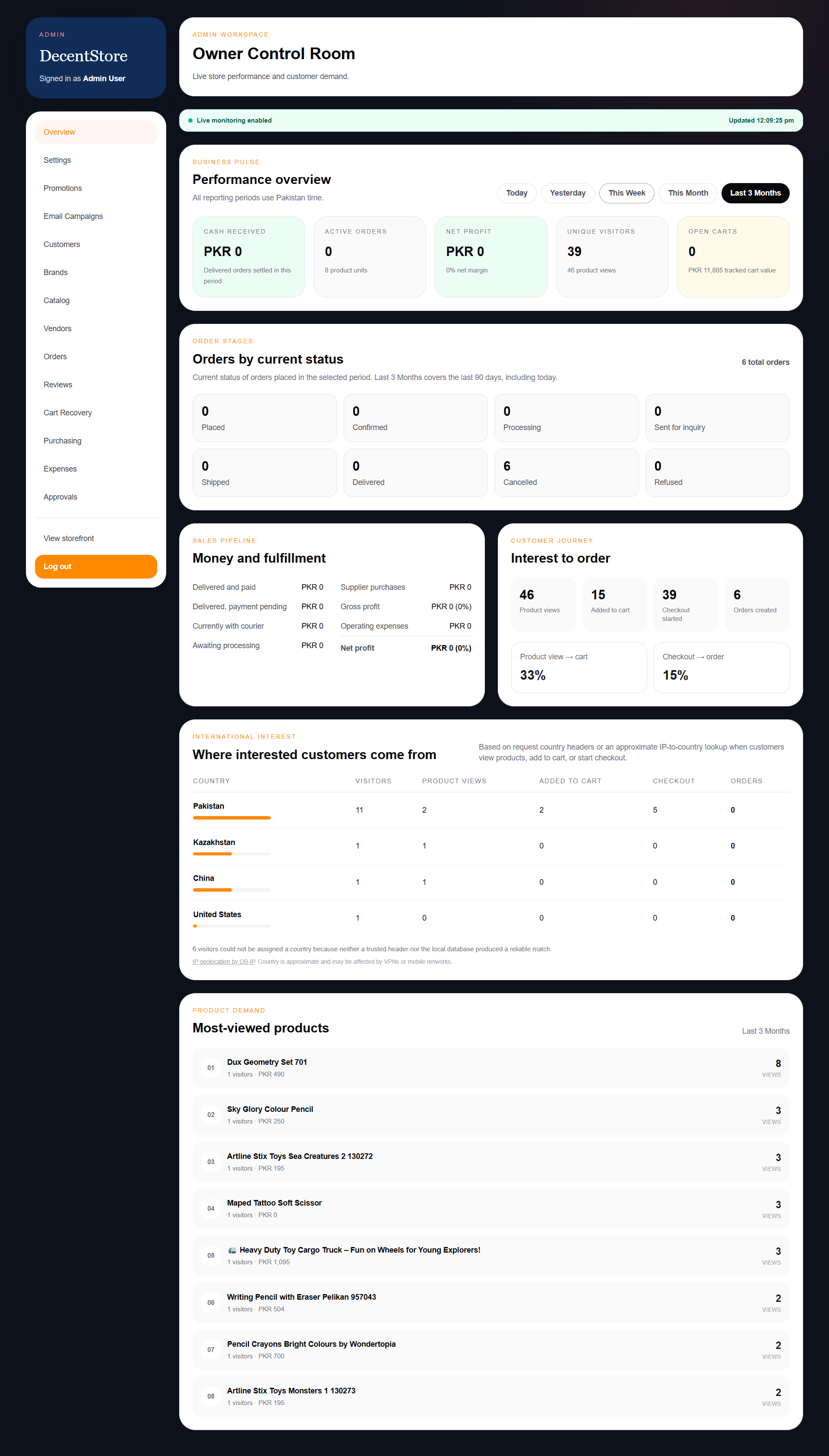
The supplied admin dashboard screenshot shows a central overview of order statuses, payment and fulfillment categories, shopping activity, country-level interest, and most-viewed products. This brings several operational signals into one workspace for owners reviewing store activity. Country estimates are approximate; the displayed figures are a snapshot, not evidence of measured business improvements.
Courier payment reconciliation addresses the need to connect delivery-related payments with business records. Reviews, promotions, email campaigns, and WhatsApp notifications broaden the platform’s customer engagement capabilities.
The documented outcome is a custom ecommerce application with a substantial functional scope. No revenue, conversion, or operational improvement figures are claimed.
[Add confirmed deployment status, approved project links, and verified outcomes when available.]
Discuss your custom ecommerce project
If your business needs a storefront connected to vendor management, international pricing, inventory, or custom operational workflows, MarqueFactory can help define a practical development scope.
MarqueFactory provides founder-led, remote software development from Karachi, Pakistan, for businesses in Europe and the United States.
Explore our custom ecommerce development, custom web application development, and API and backend services.