Why Mature Businesses Stop Renting Their Core Systems
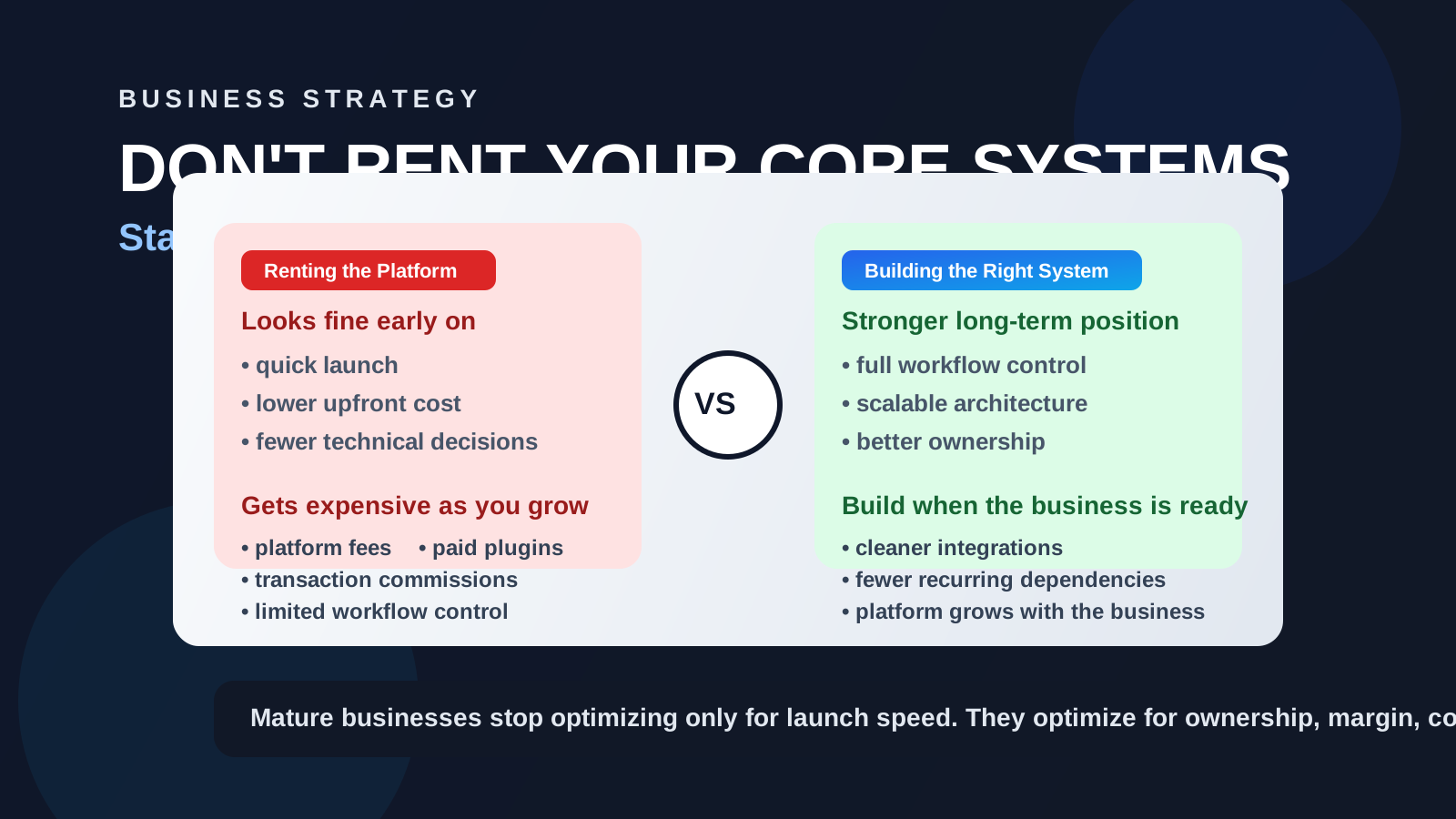
Many businesses start on platforms like Shopify, Wix, WordPress, or other ready-made tools.
That is usually the right move at the beginning.
You get:
- quick setup
- lower upfront cost
- fewer technical decisions
- less pressure to build from scratch
For an early-stage business, that speed matters.
But as the business matures, the economics and the operational reality begin to change.
The problem is not only that these platforms cost money.
The real problem is that over time, many businesses are not just paying for a platform.
They are renting core parts of their business.
Why platforms feel perfect at the beginning
Most hosted platforms are designed to reduce friction early.
That is why they are attractive.
You can launch a store, website, booking flow, or lightweight system quickly without needing:
- a product architecture plan
- a development team
- a custom admin dashboard
- infrastructure decisions
- a full software roadmap
At first, that feels efficient.
And often, it is.
If the business is still validating demand, testing positioning, or keeping costs lean, this is usually a sensible path.
What changes when the business matures
The decision starts changing when the business is no longer just trying to launch.
It is trying to:
- improve margins
- reduce operational friction
- unify systems
- support more complex workflows
- own its roadmap
- scale without getting trapped by platform rules
At that point, the platform is no longer just a launch tool.
It becomes part of the business infrastructure.
And that is where renting starts to hurt.
The real cost is not only the monthly fee
Most businesses underestimate platform cost because they compare:
- monthly platform subscription
vs - custom development cost
That is too shallow.
The real cost often grows through layers like:
- paid plugins and app subscriptions
- premium themes or templates
- transaction commissions on each sale
- developer time spent working around limitations
- manual admin work because the workflow does not fit the platform
- integration costs between disconnected systems
- slower product decisions because every change depends on platform constraints
This is where many businesses get stuck.
The platform still works, but it stops being efficient.
Plugin dependency is rarely neutral
A lot of businesses do not really have “one system.”
They have:
- one platform
- eight plugins
- three external tools
- a spreadsheet workaround
- manual approvals handled outside the product
That stack usually becomes harder to manage over time.
Each plugin solves one issue, but together they often create:
- extra cost
- update risk
- support complexity
- poor performance
- overlapping features
- unreliable integrations
This is one of the clearest signals that the business has started adapting itself to the platform instead of the platform supporting the business.
Transaction commissions hurt more as volume grows
In the early stage, platform commissions may feel acceptable.
But once revenue grows, commissions stop feeling like a convenience fee and start feeling like a structural tax on your own growth.
That is especially painful when the business is also paying for:
- plugins
- custom theme work
- premium apps
- payment-layer tooling
- operational workarounds
At a certain scale, mature businesses start asking a better question:
Are we paying for speed, or are we paying repeatedly for limitations?
Ownership matters more than people think
One of the biggest long-term issues is ownership.
When the business depends too heavily on someone else’s platform, it usually does not fully control:
- product behavior
- platform roadmap
- database design
- workflow structure
- infrastructure decisions
- performance strategy
- feature prioritization
That means your growth is still partially governed by someone else’s assumptions.
This is why the shift toward custom development is not only a technical choice.
It is a business control decision.
This does not mean every business should build custom from day one
That would be a mistake too.
A better path is usually:
1. Start lean
Use platforms when speed matters more than control.
That is often right for:
- new startups
- early e-commerce brands
- businesses validating a new offer
- teams with limited budget and low workflow complexity
2. Plan early
Even if you start with a platform, think ahead.
Know what may eventually need to become custom:
- admin workflows
- catalog logic
- billing structure
- vendor roles
- reporting
- integrations
- internal tools
3. Build and scale when the business is ready
Custom development makes more sense when:
- the business model is clearer
- workflow complexity is growing
- revenue is real
- platform cost is rising
- operational friction is visible
- the roadmap depends on custom functionality
That is the point where ownership starts becoming more valuable than convenience.
When custom development becomes the stronger business decision
Custom development is usually the stronger path when the business needs:
- custom workflows instead of plugin combinations
- better performance under real traffic and real usage
- stronger admin visibility
- lower long-term dependency on third-party ecosystems
- better integration with internal systems
- more control over pricing, logic, permissions, and roadmap
This is especially common in:
- physical-product ecommerce
- marketplace models
- SaaS products
- internal operations systems
- workflow-heavy businesses
- multi-role platforms
A healthier way to think about it
The goal is not:
“Always build custom.”
The better mindset is:
Use platforms to start. Build custom when the business has earned the right reasons to own the system.
That is a much more practical and profitable strategy.
Final thought
Mature businesses usually stop thinking only about launch speed.
They start thinking about:
- margins
- control
- scalability
- operational simplicity
- ownership
That is why many of them eventually stop renting core systems.
Not because platforms are bad.
But because a growing business should not stay locked into someone else’s limitations forever.
Need help deciding when to move from platform to custom?
If your business is reaching the point where plugins, platform fees, commissions, and workflow limits are starting to hurt, we can help you assess whether it is time to move toward a custom build.
Useful next steps: